 Episode 123
· 39:01
speaker-0 (00:02.604)
you
speaker-0 (00:25.112)
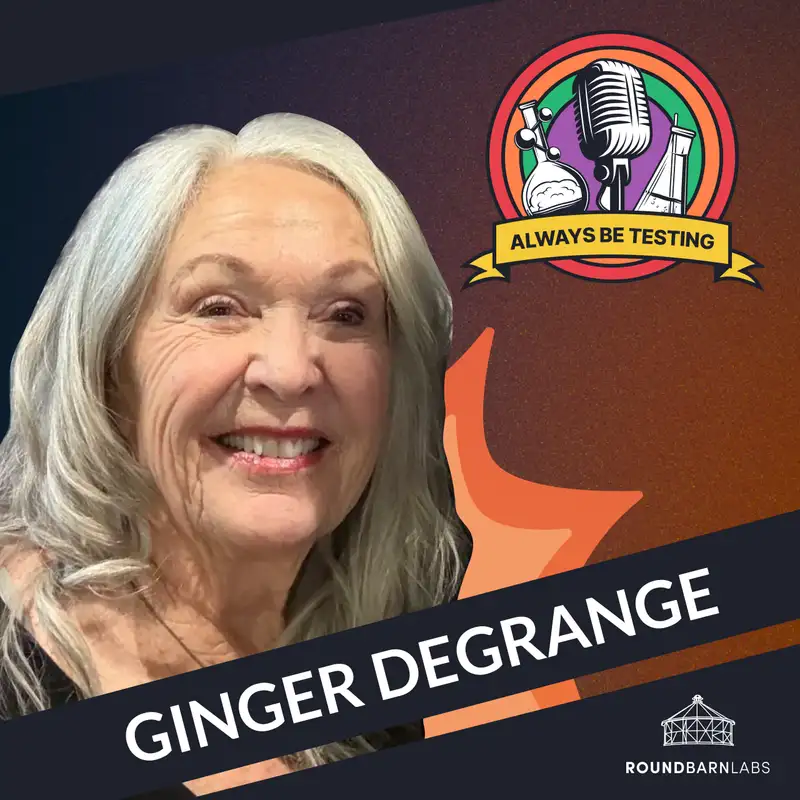
Hello, hello, hello. Welcome to another episode of the Always Be Testing podcast. I'm your host Ty DeGrange, and this is a very special edition of the pod. It is a Mother's Day edition with my mom Ginger DeGrange. It doesn't get much better than this. We're in a secret location in Northern California. My mom Ginger DeGrange is very accomplished.
A person, professional, and in the spirit of always be testing, she has a lot of knowledge and learnings to share, so this is going to be a fun one. She is a rodeo queen, which we'll talk about. She's competed at the highest level in working cowhorses, in reining, in cutting, in trail. She was a horse science instructor at the Santa Rosa Junior College for 36 years. She's taught over 10,000 students that have come through her program.
a longtime owner and operator of Cloverleaf Ranch, a well-known summer camp here in Northern California. And she was the first recipient of the Equus Awards the Sonoma County Horse Council gives out every year. She honors people, leaders in the horse community. So we're going to get into some really fun stuff and can't wait for it today. Well, hello. It's good to see you. Thank you. We get to hang out and talk horses.
speaker-1 (01:43.0)
It's good to be here.
speaker-1 (01:47.274)
I know. That's my favorite.
speaker-0 (01:49.398)
A topic that you know something about? Little bit. What sparked, what were some of the things that got it going for you and sparked your joy of horses?
speaker-1 (01:58.67)
You know, my parents bought the ranch in 1947 and I was a year and a half old and there was one horse on the ranch that came with the property and it was cricket.
And so I got to sit on a horse when I was quite young. And then when they started moving, I was really delighted. And it just grew and grew and grew. It was just like love at first sight. It was really, it was a wonderful experience and a joyful time for, you know, a young person.
speaker-0 (02:27.064)
amazing
speaker-0 (02:34.722)
Wow. What was cricket about? was?
speaker-1 (02:37.422)
She was strawberry rone and she wasn't very attractive. She had a great big old belly and kind of a sway back but she was just a nice kind horse and and I remember Just enjoying being next to her and just pushing, know brushing her or and on her back was always fun It was great
speaker-0 (02:59.936)
Yeah, that's amazing. What kind of was the next as you, you know, got older and got more comfortable around horses and obviously grandpa was, you know, heavily involved. How did that kind of go from cricket to the next thing that you're excited about?
speaker-1 (03:17.934)
I met a really special person in my life, Birdie, when I was in, I was 10 years old, so think I was like fourth grade, I think. And she had a horse boarded just not too far from the ranch. And we got a lot of fun, but we did a lot of things that my dad would not have been very happy about. We would run those horses all over the hills.
off the ranch because the traffic was not that bad. We'd ride, you know, to wiki up and all those different places close. And, and we just had a ball. That's amazing. a lot of it was unsafe.
speaker-0 (04:02.751)
Hahaha
speaker-1 (04:03.774)
But we didn't know that and we got hurt so it was one of the favorite things was when they got ready to cut the hay they put it in furrows and that before they bail and we'd ride along and Fall off our horses and see how much we could push out of the way. My did not like that He was not happy at all because he had to go back out and put it back
speaker-0 (04:31.146)
wow. you would be running along and purposely jump off and knock over the hay bales.
speaker-1 (04:36.163)
They
speaker-1 (04:39.566)
see how far we could slide. Yeah, the only other thing that was, you hair raising is I wanted to be a trick rider. And there was an actual trick riding school that was available, but he didn't want me to go there. So we improvised. And so I was on a horse called lightning. And I got in the back of the saddle and tied my
speaker-0 (04:42.296)
Wow.
speaker-1 (05:07.778)
the saddle strings around my ankles and went back and said, go and at a run out at the flats. And there was no way could stop my horse. And my girlfriend was running alongside of me. finding my horse stop. But it was sure fun. My dad was would have just turned
speaker-0 (05:17.158)
my god.
speaker-0 (05:26.361)
Wow.
speaker-0 (05:31.414)
Yeah, I mean, and there's things that he probably did that you wanted to turn over about because
speaker-1 (05:37.954)
Well, he pushed, he made some of this happen. You know, he, he said, you know, if you're bringing in the horses and they're starting to make the turn, you run down that hill as fast as you can to stop them. And when he asked that I did it. So that's it was a bit of his fault too. So much.
speaker-0 (05:55.614)
my gosh, that's amazing. Wow. You know, the horse whisperer stuff is talked about and, you know, obviously getting comfortable and you've talked about like feel on a horse and how do you, for people that are maybe not super familiar with the horse world, how do you think about the topic of feel on a horse and how do people that want to get good at horses figure that out?
speaker-1 (06:24.652)
You can do it in several ways depending on how timid the rider is. Sometimes you do things on the ground. They're not even on the back yet. But you can do what we call rain management. And you can have them hold the reins since they're not on the horse. you learn how to shorten and lengthen the reins. then we... So that is the first thing you want to teach them so that they have control to stop the horse.
That is so by the time they get on the horse, they know how to do that and that they have a tool and it's much more rewarding when people know that they've got control over the the animal.
speaker-0 (07:10.998)
Yeah, that's amazing. That's amazing. It's you've talked about it a little bit something that's you know, as that feel becomes more advanced for writers, and it's also sort of hard to articulate it, like how do you get there? Have there been some things that you've done for writers that are a little further along trying to figure out that feel and that help help show them it or teach it to them?
speaker-1 (07:38.958)
Thanks
When we talk about feel, we're talking about your hand and your direction and the contact on the horse's mouth. And we talk about the pendulum, which is a pendulum we say because it swings, it's smooth, it's not jerky, it's not a hard line. But if you're putting pressure on a horse to stop, we start at zero and we go to one and then two.
and we come up slowly through all the, up to like 10. But we don't just jump. We never go from one to the other without the middle just being smooth. But you can do that by also having your students hang on, they're not even on the horse yet. They have the reins and you have them practice that.
And then you have them hold the reins and then you, meaning me, I would take it and I'd pull it really fast. And I'd say, now, how does that feel against getting contact and then pulling? so they try to develop a feel before they even get on. And that works really well for timid riders also. So that they, they learn that they've got
speaker-0 (09:02.764)
Yeah.
speaker-1 (09:05.634)
Control and you can do it on the ground. Yeah, then you can put the the rider on the horse And then before you even go take a step Yeah, you can have them practice that and so it gives them knowledge and and a sense of control
speaker-0 (09:22.338)
Yep, I remember watching some of the Buck Brandeman describe his way of doing that and you just almost to a T described what he was sharing like a lot of those lessons. Well, yeah, and I think I think some of it, you know, you guys were talking about, you know, similar time before him too. And, you know, obviously he was really good. But I think you the way you described the
speaker-1 (09:35.15)
You've taught us
speaker-0 (09:49.87)
Do you grab it from somebody or do you slowly let them know, kind of give them a warning and it's softer? Other parts of the soft for horsemen and horsewomen that are trying to figure out softness, is there other things that you do to define what softness means and how important that is?
speaker-1 (10:13.88)
There's another, when you take the top of your head stall, and it's not on your horse, you're just holding it up, and you put your hand between the bit and the chin strap, okay? And you pull on it, they get...
what that feels like. you don't, I don't jerk on that one because I could hurt somebody. But I would take it and I'd start pull and they can feel the leverage. And the leverage has a lot to do with how light you want to be on a horse. If you're riding with a snaffle bit, the bit, the reins are right at the mouth.
But as you drop a shank, this was a class I didn't do well in, think it was physics or something. the degree gets stronger. So you could be very light on a long shank.
speaker-0 (11:08.172)
bit. Because there's leverage. Yeah.
speaker-1 (11:10.434)
There's leverage because it's the chin strap that holds it.
speaker-0 (11:13.228)
Yeah, whereas a Snafl bit you don't have as much leverage.
speaker-1 (11:16.038)
And you don't have a chin strap. You don't need it. People sometimes put them on, it doesn't serve any purpose.
speaker-0 (11:23.278)
Wow. Yeah. When someone comes to you and all the students you've helped and educated over many years, are there kind of like a, these are the big three things you kind of touched on some of it already, but hey, these are the basics that you kind of need to have, or these are the core three that you want people to take away with.
speaker-1 (11:47.086)
I think I could have answered that.
speaker-0 (11:50.092)
Yeah. Okay. one of the, one of the things you've, talked about is like, how do you make people feel comfortable on a horse? And what are some of those things that you try to do to make people feel comfortable?
speaker-1 (12:08.46)
Well, one of the things is when somebody's walking up the road and they're coming up to where we are with the horses, I can spot things pretty well just over the years. Like I can spot the timid one. They're a little bit slower and they don't have a cadence, good cadence to their walk. It's restricted. And then you have the, you know,
I rode once and I'm a professional. And those stand out. And then there's other people that just have a softness. They're not tense. They don't have an agenda. And those are the ones that go with certain horses that I would pick.
speaker-0 (13:00.174)
Yeah. Wow. And it sort of kind of touches on it. You've already talked about it, but like, it seems like getting the rider with the right horse is reasonably important, right?
speaker-1 (13:12.872)
yes. But the key is to know your horses. Because if you know that this horse is not as sensitive, that you can move your legs around and the horse isn't going to move faster. In fact, sometimes they're a little pokey. But you have to know your horses in and out so that you match the rider and the horse. And I've been very, very fortunate with that.
I really know my horses and I know their abilities and their sensitivities and what they're good at. And so when they come in and the age of students, the older they are, the harder it is to teach. The young ones are, you know, very pliable, if you And they're rarely really afraid.
Sometimes they are and so we spend more time on the ground just next to the horse and and maybe have them touch him and and I don't like to put them at the horse's face because I don't want them to learn to come up and put their hand out to a horse that they don't Know is you know good for that? So no, it's it's it's knowing your horses and and being able to identify What rider needs which horse? Yeah?
speaker-0 (14:29.569)
Yeah.
speaker-1 (14:39.786)
And I've been very, I will say very good at that. That's what makes it work.
speaker-0 (14:44.566)
Yeah, that's Yeah May sound like a silly question, but how does how would you say to get to know your horses? Like are there things that you? It may sound silly, but like what are some things that you do to make sure you get to know them?
speaker-1 (15:02.574)
One thing is, you know how they come in the barn, okay? And then we have the stalls that they go in and we ask them to, you know, back out of the stalls. If a horse is flighty or comes out real quickly, that horse, I would be more apt to put with an advanced rider just because they're showing me sensitivity. You have horses that...
you go to bridle them and they move their head quickly or they've been maybe abused somewhere down the line. So you can work through that with good ground handling. When you're working around a horse and the horse always knows where you are, you're not sneaking up on them and you bridle correctly so you're not banging the bit into their mouth. Those kind of things
all add up to what I would pick as a good horse. The really slow, pokey ones, you sometimes they're too pokey and slow. Like for a trail ride, you want something that at least stays up with the group, or you have two instructors, you have your main instructor in the back and the lead instructor is the assistant, because then that the instructor can look down that line and say, okay, slow down.
or you know if there's a problem I can see the whole line where I used to ride in the front and ride turn my head backwards and boy I spent a lot of years twisted.
speaker-0 (16:41.057)
Your neck was a little sore from that. Yeah. We talked a little bit about imposter syndrome and how that shows up in business and life and horses and you kind of said, well, yeah, it's about confidence. How do you think about building confidence for riders that maybe don't have it and they maybe should have a bit more?
speaker-1 (17:01.934)
Well, you one you pick the right horse to you pick the right person for that horse. And then you might not put them on the horse right away. You might stand next to the horse. A lot of times I'll stand and I'll have my hand on the horn and just you know, hang like this and just talking to him. And then they're like in your position. And then, you know, I have him stroke the horse. I don't just
speaker-0 (17:21.411)
Yeah.
Yeah.
speaker-1 (17:30.414)
slam dunk them on. if they are ready, I do because I want to get going. I want to get the lesson started. But if you have somebody that's frightened, that's not funny. To be fearful of a thousand pound horse is somewhat smart. And so you encourage and they might say, well, is this horse nice? And you don't make any jokes. You say, yes.
this horse we use in our lesson program, and there's young kids that ride it too. This is deep, I'd be talking to an adult or another person that's larger than four. And you just encourage them with and give them knowledge. This isn't, you know,
speaker-0 (18:17.666)
You know? that's great.
speaker-1 (18:21.57)
These aren't mechanical animals. Yeah. And you're not mechanical either. We don't have feelings. Yeah. And so we're going to work together. It's it's it's just amazing what these horses do for us. Yeah. You know, they have so many miscues and they still will come to the party for us. I just I admire that so much. I've seen it in the in the show world.
speaker-0 (18:29.356)
I love that.
speaker-0 (18:44.758)
me.
speaker-1 (18:51.246)
where there's been quite a lot of brutality in the warm-up pens. And they really get after these horses. And it just amazes me that these horses, they put up with a lot, which they shouldn't have to. You should make your horse's life as easy as possible. And that's why we have such longevity in our program.
We have horses that have been on the string 10, 15, sometimes 20 years. And they're not sour. They're not runoff. They know their job. And they're happy. And that's what a happy horse is really important to me.
speaker-0 (19:38.604)
Yeah, that's amazing. I love that. You know, and talked a little bit about the cutting horse and working cow horse experience you've had over the years. And was there, was there a run that you think back on that you recall?
speaker-1 (19:54.43)
Yes This was in that Working cow horse and in working cow horse. You have a pattern and then you work cow. Okay, so you do your dry work first and This was down at the Grand National at San Francisco and my My dry work was real sweet just you know, nice slides real, you know loose rain
quiet but but speed in it and then my cow work was really hard for some reason it was on i can't even remember the horse right now no no anyway i was i was running down the fence and i felt like i could run faster than the horse and i finally you know made the made the catch and all that yeah and came around and made my circles
speaker-0 (20:39.502)
Dior.
speaker-1 (20:54.174)
And I've seen these guys do it and I patted the steer on the butt as I'm circling. And I thought it was so funny. It was fun. A lot of times the cow was... And I thought, this looks... It was just having so much fun. I did a lot of grinning that day. Yeah, it was great.
speaker-0 (21:04.172)
Wow
speaker-0 (21:07.882)
showmanship.
speaker-0 (21:13.71)
You were in the zone? That's amazing. was in the Cal Palisades.
speaker-1 (21:20.478)
Yeah, that was in 19... that was probably... 65.
speaker-0 (21:27.054)
Okay, those are 60s.
speaker-1 (21:29.278)
no, no, no, was further. It was later because I was a big girl.
speaker-0 (21:33.558)
Yeah. Maybe the late eighties. I'm trying to remember that. Yeah. The buckle was, was large and pretty exciting. That was so cool. What, I mean, what kind of clicked there on that run? What was, what do you think it was?
speaker-1 (21:49.166)
It was like, yeah, it was, it was like effortless. except that, you know, running down after that cow, he was getting a little bit pokey. But it was, I didn't, there was nothing I didn't pull on anything. I mean, we were just in sync. Yeah. And you know, when you're that way, it's like a dance partner. Yeah. And you're just sitting there. Yeah. I mean, you're smiling. Yeah. Because it's, it's such a joy. Yeah.
There's nothing rough about it. The horse knows exactly and I know exactly what the is doing. it's, it's was, there's a lot of moments like that. I've had a cutting was, this is a funny story. I went to the world on Muhly and this was for cutting. And I,
speaker-0 (22:29.74)
Wow.
speaker-0 (22:33.464)
Yeah.
speaker-1 (22:48.29)
went in and I thought, okay, and there's some rules of how you get a cow out of the herd. And so you always, you know, there's some that volunteer and you got to kind of see that, or they look away from the herd a little bit, just enough so you can get in and get them out and then start to cut. Well, with this particular, go all the way to the world, I am so excited. I know my horse can do this. I know he,
The cow cannot outrun him because he's really quick. And there was two that I cut and I ran over the volunteer and picked the runner. And it was just a mess. Just a mess. And I, know, to go that far.
speaker-0 (23:32.676)
wow.
speaker-0 (23:38.19)
Yeah. Yeah. Yeah.
speaker-1 (23:40.482)
So you don't get too, you know, sassy. You know it all.
speaker-0 (23:45.196)
Yeah, you had it all teed up.
speaker-1 (23:47.182)
I almost knocked the cow over. Oh my.
speaker-0 (23:49.944)
Gosh, my gosh. It was funny. Didn't go as planned.
speaker-1 (23:52.736)
It was a long trip.
speaker-0 (23:57.23)
That's amazing. That's amazing. when you are there, is there a student example where you think, wow, that just
so proud of the outcome and the improvements that you've gotten from the conversation or the teachings with a particular student or a particular example.
speaker-1 (24:18.924)
I have hundreds and hundreds and hundreds of absolute success stories. I just love it when it all comes together and I can usually bring it together pretty quickly. And it's just it's such a joy for me. Yeah, because I'm giving them the joy of writing, but doing it with with thought and softness and feel.
So it's my win too. Yeah. But I got some wonderful students. Jason. He was a camper with us. He lived with us for a while because he wanted to train with Ron. He wanted to be a trainer. Yeah. And he's now a trainer in Canada and doing extremely well. Yeah. And it's just it's just fun to see.
speaker-0 (24:53.784)
Yeah. Yeah.
speaker-0 (25:13.998)
Yeah, I'm probably digressing but reminds me of Sean McCarthy too.
speaker-1 (25:23.84)
Yes. yes. Yeah, Sean, he was a camper and then he lived with us to get him through high school. So I had to do a lot of teaching and helping him. And then he just he's, you know, one of the top trainers down at Santa Anita. Yeah. And wonderful, wonderful person. Yeah. And wonderful with the horses. Yeah.
speaker-0 (25:51.355)
Yeah, I know it's not necessarily horse learning related, but we always tell the story of the table manners.
speaker-1 (26:00.462)
that's so funny. Well, he kind of looked like a barbarian when he'd sit at the table and we keep straightening him up and saying, you this fork does this and you sit up and you don't lean over your plate. Yeah. We said, you know, one day you might be eating with the president. Well, he went to England and as everybody knows, the Queen absolutely loves the horses. So guess what?
speaker-0 (26:27.598)
Eating with the Queen of England.
speaker-1 (26:30.188)
He was eating with the Queen of England.
speaker-0 (26:32.746)
Amazing. You prepped him well. I know. When a new student comes to you, what's the first five minutes look like in terms of what are you kind of trying to assess for them and help them get ready and do the right thing?
speaker-1 (26:35.192)
Yeah.
speaker-1 (26:50.946)
I try to avoid the question of have you ridden before because people ride once and it's the only sport that now they're a champion and they say yes I've ridden yeah and it might be once yeah so I usually don't ask that question I just said you know are you comfortable around horses and I can tell by their stance the way they're breathing you know
yeah, and, I already have an assessment, even just want to walk up so that, I can make the right decision. And, as I said, I, I just been super lucky with it because it works.
speaker-0 (27:35.886)
Yeah, that's amazing. I mean, now you have to tell that story. It's pretty good. It's okay. No, I think you're safe.
speaker-1 (27:43.214)
I don't want them coming after.
speaker-1 (27:49.324)
Okay, well, we used to have a sports celebrity with was the Redcoats were a group of men that put on events for, you know, father and son, they had father and son banquets, and then they'd have professionals and, and star like, know, stars coming in. And so, OJ came and when I my dad wanted me to take out all the trail rides. And so I
in started and I was like 14 and you know here I'm telling these you know linebackers and all these other people you know what to do and they they were very kind and very respectful yeah well OJ comes and he's you know he just won the Heisman trophy yeah so he was feeling pretty you know important and he ends up going on this trail ride and I had him on a little bonnie and I kept telling him to
keep the distance so a horse wouldn't kick and break his leg and he can own the ranch. So I said, you know, I kept telling him this, telling him this and I finally lost all patience and I ran my horse right at Bonnie and I grabbed her and I made her rear. I said, get off. You're walking home. And he looked at me. I said, no, you are getting off and you're walking home. So we're coming back with the trail ride and
OJ's, bleeding a horse, my dad is going, you didn't do that to OJ, I said yes I did. And so that you know the rest of the story with blonde, brown eyed girls.
speaker-0 (29:30.978)
Wow, that's amazing.
speaker-1 (29:35.182)
But all the other guys were real supportive of me. And he was just being a jerk. I hope that's OK.
speaker-0 (29:41.218)
Yeah, there you go. Yeah, I think we're all right. That's amazing. Please.
speaker-0 (29:54.42)
isn't in the way. I too? okay. Okay. Thank you so much. I really appreciate it. You're awesome. You were getting engaged. Yeah, yeah, yeah. Closing closer in. Thank you so much. Appreciate that.
That's amazing. Unbelievable. Yeah. Miguel's into it. What was some of the harder lessons that you have to get through to a student on and have a conversation with the student about besides OJ?
speaker-1 (30:12.686)
Crazy.
speaker-1 (30:28.046)
you
speaker-1 (30:31.598)
There's so many that are I mean, I can't there's not like one Yeah, it's it's more of a type of person I think sometimes the ones who think they know it all and are too quick with their hands and in order to get them to Respond that person would be the one I'd put down on the on the ground and and then do the thing with a bit
and I would pull it hard. Sometimes they think they're like machines or something and that they don't have any feelings and they're so wrong because they can really hurt you. But you have to be in control. You have to be the boss when you're riding. The horse can't be the boss, but he can be your best friend.
speaker-0 (31:26.882)
Yeah, that's a good reminder. And you'd say you'd get down and kind of pull hard. It was that to show them that...
speaker-1 (31:33.208)
what it feels like. And then, and then I do it to them. And then I go now, you're not going to pull that hard, right? So yeah, so then and sometimes I'll hold the reins and they're on and I have pull and I go no, no, you're pulling too hard on my hands. You know, I'll have a slack here. So the horse doesn't, you know, have the sensation. But yeah, by doing that, you you can, you know, get the feel of
speaker-0 (31:42.974)
I see.
speaker-1 (32:02.702)
how hard they're pulling. Yeah. And we just back it off. But I think adults are probably the hardest, you know, because we're so set in our ways. We've experienced the world and we are knowledgeable. you've got to come with some humility when you're learning a new sport. And that's the only way you're going to really gain things. Yeah. Because your ego is not going to get in the way.
speaker-0 (32:06.786)
Yeah, wow.
speaker-0 (32:10.723)
Yeah.
speaker-0 (32:32.248)
Yeah, that's great.
speaker-1 (32:33.856)
So it's and kids are really wonderful. know, they aren't as fearful for the most part. Yeah, some of them are. And you just, you know, handle them differently.
speaker-0 (32:44.748)
Yeah, absolutely. Speaking of kids, there to preserve kind of like three core ideas or a few that you really think are important that you'd, hey, this is what I want my grandchildren to be aware of around horses is what I want the next generation to know about your style of horsemanship or your teaching.
speaker-1 (33:05.352)
that would be a lot of information. And I think, I think what with a child, you want, you want them to be happy, you want them to be successful, and you give them the tools to ride 1000 pound horse and control it, they feel pretty proud of themselves. And so I work at encouraging and, being right with them. So that
they can see that they're the ones doing it. They're the ones giving the horse the messages and they're getting a response. And you can see in their little, you know, their smiles, their first jogs are sometimes, you know, they're a little bit scared and you can do that on a lunge line. If you, you you don't want them to go on their own or you can just put the in a small circle around you and have them do that.
Yeah, so you and then you you do short you do short Tests in other words, you don't jog for 10 minutes you you maybe jog half a circle and then you have them walk and so now they've they've Experienced that but they also have the control to go back to a walk. Mm-hmm. And that's really rewarding Yeah, you know you you give tools to people and they work
you know, and then they can pat themselves on the back and they grow with, you know, the writing experience. Yeah, they get confidence, you know, and it's a joy to see children that are confident and happy.
speaker-0 (34:42.306)
Yeah.
speaker-0 (34:48.942)
Yeah, that's amazing. It sort of I feel like it might connect to the next topic we've talked about a little bit which is Are the things about the horsemanship or horses that taught you about leadership or do think there's things that translate there?
speaker-1 (35:04.398)
Yeah, I had you know, I've been bucked off and you know, I've had horses rear and I've had horses kick out at me and and that develops quite a you know a Respect mm-hmm respect the the animal. Yeah, but I've never been you know injured in anything bad except I had some ribs I broke Letting the horses out the gate and they all
speaker-0 (35:32.322)
Yeah.
speaker-1 (35:33.922)
wanted to run at once and they smashed me against the gate. But that wasn't, you know, any intentional thing. they're just, they're grand animals.
speaker-0 (35:45.006)
Yeah, absolutely. They are. What do you think, are there, obviously you've had such an influence on so many people teaching horsemanship and horses. Are there other folks that you've looked up to over the years when you were kind of figuring out your horse journey that you thought, wow, that person's really helped me or?
speaker-1 (36:09.494)
yes, this is an interesting story. We used to have a hay wagon and we had four draft horses. And my dad would get them out of the pasture, put the harness on, they were all shaking, they were ready to go. They were scary because and then he wants me to put the hame's bells on. And they jumped over the tugs. I mean, it was it was like scary. And he goes, Okay, bring all the kids.
We're going up the hill. So he figured that if they pulled real hard or fast, by the time we hit the hill, it'll slow them down. Well, I'll tell you what, that was a frightening experience.
speaker-0 (36:53.548)
You
speaker-1 (36:56.108)
So there was an old man, 80 years old, just like me. There you go. And he came up and he wanted to help with the horses. And he was a reinsman. And so he walked really slow. He did everything so slow.
speaker-0 (37:13.816)
Yeah.
speaker-1 (37:18.094)
because he couldn't walk fast. And these horses would normally be prancing around and moving around. They absolutely melted. And these horses just got so quiet. And I went, I'm going to do that. And also Harry Crowe, who owned a saddle shop in Santa Rosa and boarded a horse, he was a wonderful mentor. wow. Again.
saw that quietness. It's not the cowboy jumping around and being ee-haw. It was just quiet and those horses just melted to that. And I respected that so very much and I took that as mine. I really wanted that because I didn't have to be energetic. I could really be soft.
speaker-0 (38:08.844)
Wow.
speaker-1 (38:17.038)
and quiet and not creepy, not creepy soft. Easy, easy. No, it was nice. was a wonderful time.
speaker-0 (38:26.414)
There's like a calm confidence that you're talking about.
speaker-1 (38:29.386)
It's like, you know, I'm not going to be jumping at you. Remember, the horses are prey animals. Yeah. And so, you know, moving around them nicely and not making quick moves is secure for them. Yeah. So I, but I love those men. They were so, so incredible. My dad was not that way. Daddy was a little bit more of the getty up and go. Yeah, but
speaker-0 (38:49.058)
Wow, that's really cool.
speaker-1 (38:57.952)
Yeah, but I did both. Yeah, you know because I barrel raised too, you know, and that was fun So I i've kind of had a lot of different experiences
speaker-0 (39:06.702)
What's the secret to barrel racing for people who are interested? Hold on, hold on, don't lose your hat.
speaker-1 (39:12.27)
course.
speaker-1 (39:19.446)
yeah, yeah, we used to, you, a lot of times you'll see barrel rusts come out and they'll hit their hat, and because it's going to fall, they were put a five second penalty. So we didn't do that. We pinned our, I had so many bobby pins to hold my hat on, I had a headache, but I couldn't lose my hat.
speaker-0 (39:41.376)
right? Don't go off course and don't lose your hat. Yeah. Amazing. What else am I, should we not, I'm not asking that I should be asking about.
speaker-1 (39:44.45)
Yeah.
speaker-1 (39:58.734)
Yeah. I don't know.
speaker-0 (40:00.679)
Was there another horse that that we've not touched on that was really
speaker-1 (40:05.23)
Well, this was back when Bertie and I were riding, you know, and doing silly things. And lightning was my first horse that was given to me. And we took him out in the lake and stood him like, you know, up to the withers. And then we'd swim between their legs. Oh, my God. And they let us do it. It just, you know, of course, I was a kid. Yeah. So I think that innocence
speaker-0 (40:27.158)
Ha ha ha.
speaker-1 (40:34.294)
Yeah, you do things that you wouldn't do as an adult because you know, you could get super hurt very quickly. But it was it was things like that that were really fun and jumping logs. I wanted to jump, you know, stadium jumping and my dad wouldn't let me so I was doing logs but I didn't know what was on the other side. We're just, you know, having fun but never had an injury. my god. Safety in the, you know.
speaker-0 (40:41.729)
it.
speaker-0 (41:00.12)
Gosh, amazing. Yeah.
speaker-1 (41:04.126)
Being a little slow or something, don't know.
speaker-0 (41:07.352)
being maybe not knowing too much, but knowing enough. That's amazing. my gosh. You, you, we talked a little bit about some of the books that you've reading recently that looked really interesting. Was it human brain, horse brain? Yeah. And you've obviously read some great ones. Is there some things in there that you think are helpful for people to be aware of?
speaker-1 (41:11.192)
to get hurt.
speaker-1 (41:31.66)
I really, really recommend the book. I seriously, it is an incredible book. I think what hit me the most is the...
these animals, as I say, they're prey animals. And so they've got the eyes out wide. And then the predator, he's got his more narrow, well, weird narrow-eyed too. So we look like, we can look like a predator. And I think that with that in mind, the book is really,
worth reading. mean, I can't tell you all that's in it. But basically, it makes sense when horses spook at things, and it goes over how to get them to be, you know, better around that thing. So what happens is I always didn't do the right thing. Yeah, you know, I pushed the horse maybe a little too hard when he when he did spook.
Instead of changing it up and and it's mentioned in the book, know how to do that but it's just a marvelous study of how the horse thinks and How they see things because we don't see it in the same way. Yeah and so I I think when we look at that and and try to figure out what the horse is thinking or the horse sees I Think we can become better horsemen
speaker-0 (43:13.352)
that. Yeah. Very cool. Yeah. Well, thank you so much for coming and and doing this and chatting and it's it's always always a joy.
speaker-1 (43:24.942)
Well, thank you. you. It's my joy to talk about horses because I just love them so.
speaker-0 (43:29.996)
Yeah. Yeah. Well, thank you. Thanks, everybody.
speaker-0 (43:36.622)
you
speaker-0 (43:49.962)
you
Listen to Always Be Testing using one of many popular podcasting apps or directories.